
Homemade Bagels!
Connections, an excellent low-ABV cocktail, and lots of viewing and reading recommendations ...

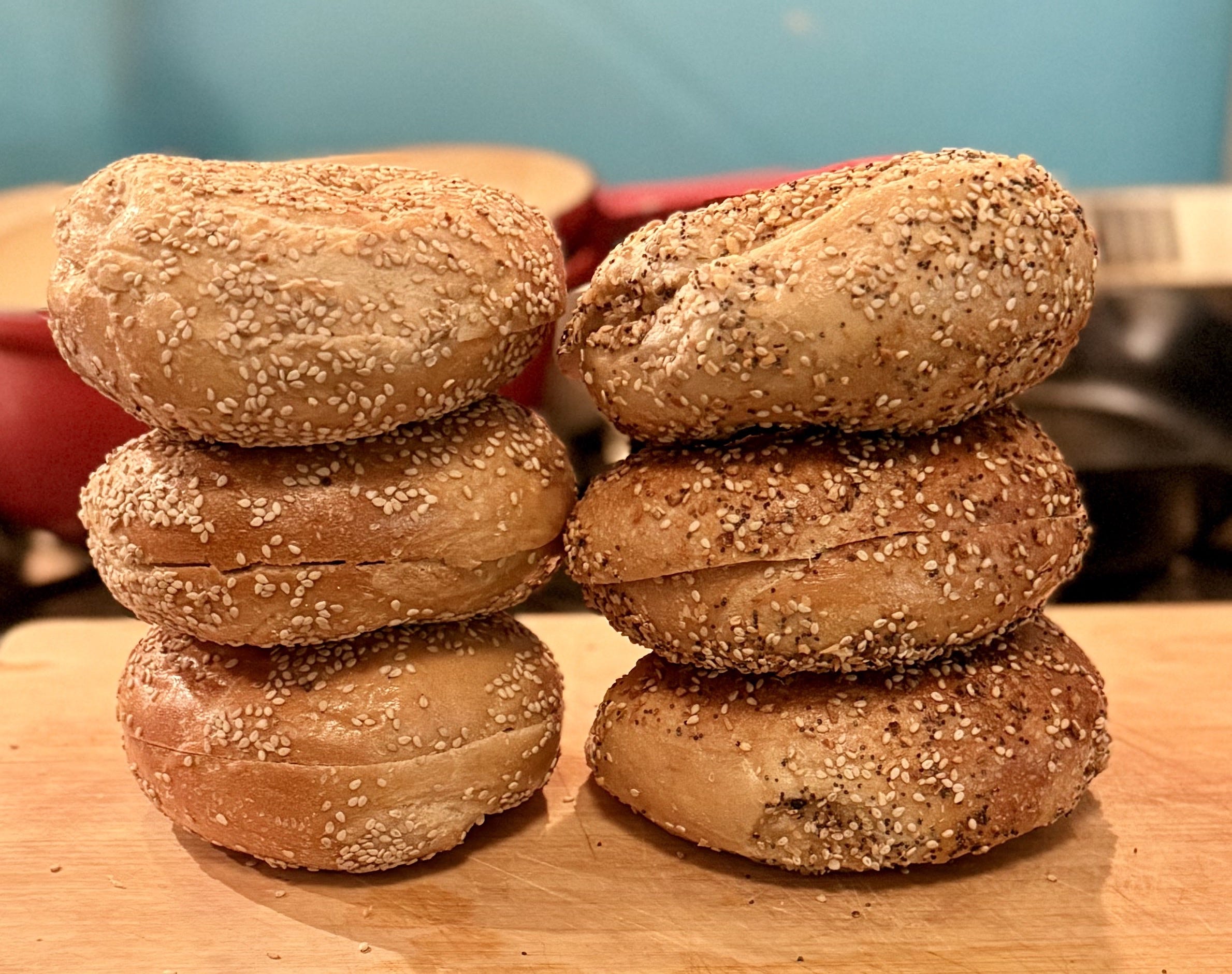
I’ve been living in New York City for about ten years and full-time for the past four. Gotham is, of course, the bagel capital of the world. A couple blocks away from us, at Greenwich Ave and 11th St, is Apollo Bagel, which The Times says makes one of the best bagels in the city. We disagree and feel the hike, one more long city block over to Murray’s on 6th Ave, is well worth it. These are the best bagels.
So why would I make bagels, in our teensy apartment? It’s too small even for a stand mixer—so I’d have to mix by hand. And I’d have to bake them on the toaster oven pan (our CarrieBradshaw-like oven is where we keep our pots, not our shoes).
Bagels are just too cool. Thinking about them is my problem. There’s malt syrup in the dough. What’s up with that? And what other doughs do you boil before baking? You make the water alkaline with baking soda or something stronger. And the shiny crisp exterior and the soft, chewy crumb is just too wonderful to contemplate without wanting to actually make them myself.


Karen Karbo is the one to blame for my current bagel fixation. She’s a writer and teacher who lives with her husband in Collioure, a tiny coastal town in the very southwestern edge of France. This past winter, we were with both at the Todos Santos Writer’s Workshop and she lamented the lack of bagels at home. Did I have a recipe?
In fact I did, I told her. In 2011, back when blogging was fun and connected people with one another, before Search Engine Optimization (SEO) took over, a baker in Boone, NC, named Bruce Ezzell commented on a blog post of mine. It led to a back-and-forth that ultimately resulted my asking Bruce to write a guest post on how to make bagels.
Fortunately or not, a bit of total knee replacement surgery waylaid my current plans to make bagels. For a while, as I relearn to walk and exercise the muscles around the new knee, I will only be able to contemplate them. But I wanted to republish Bruce’s excellent recipe here.

One thing I’ll be thinking, during my recovery, is how easy they are to make at home. If you can make bread, you can make bagels. And because I am in no shape to make bagels, I’m hoping one of you dear readers will accept the challenge of making them and letting us know how the recipe works for you and send pics. If enough do it and send photos, I’ll publish the results here.
You don’t have to move to New York City to have great bagels.
And I just heard from Bruce by email—after 15 years! I wanted to know what had changed. Here’s what he had to say about how he’s changed:
I’m still in Boone, but not running my baking business anymore, though I’m still baking at home. My bagel recipe hasn’t changed, although I did alter some of my technique. Rather than boiling with baking soda, I switched to sodium carbonate. Ph is a little stronger, making the crust a bit chewier. Also, a bit of malt in the water gives a better color when doing small batches.
Sodium carbonate, or soda ash, is the same thing as Washing Soda. You can make it from baking soda by actually baking the soda. Serious Eats has a good article on the process (very simple). https://www.seriouseats.com/baked-baking-soda
I think it gives a very satisfactory crust for bagels and pretzels without having to deal with lye.Thanks for the link to the article [Bruce’s original post]. My kids will get a kick out of that. In kind, I should say that the Lemon-lime Pound Cake recipe from your book Ratio remains one of my favorite desserts.
All the best,
Bruce
Bruce! I and many others thank you. (And for those bakers who do make try Bruce’s recipe, extra credit for those who make their own sodium carbonate! Though you don’t have to make the full two pounds called for in the Serious Eats recipe! One standard box should do!)
Related: Ten years ago an American living in Moscow wanted bagels in the bagel-less city. He eventually found my post and Bruce’s recipe. He writes about the saga on Food52. He does two things different from the recipe: He adds honey to the boiling water and he egg washes them before garnishing them.
My dinner with Jenny …
Back in January 2023, this newsletter got maybe a thousand new subscribers in a day (I’m emailed an alert when someone subscribes). With a little googling I discovered that a Substack called Dinner: A Love Story had recommended my Substack (or actually, recommended my wife’s book recs, featured in it). It’s written by writer, editor, and cookbook author, Jenny Rosenstrach.
I didn’t know her work, I’m embarrassed to admit, because she knew mine and had for some time. In her first book, the perfectly titled Dinner: A Love Story (Ecco, 2012), I get a mention early in the book.
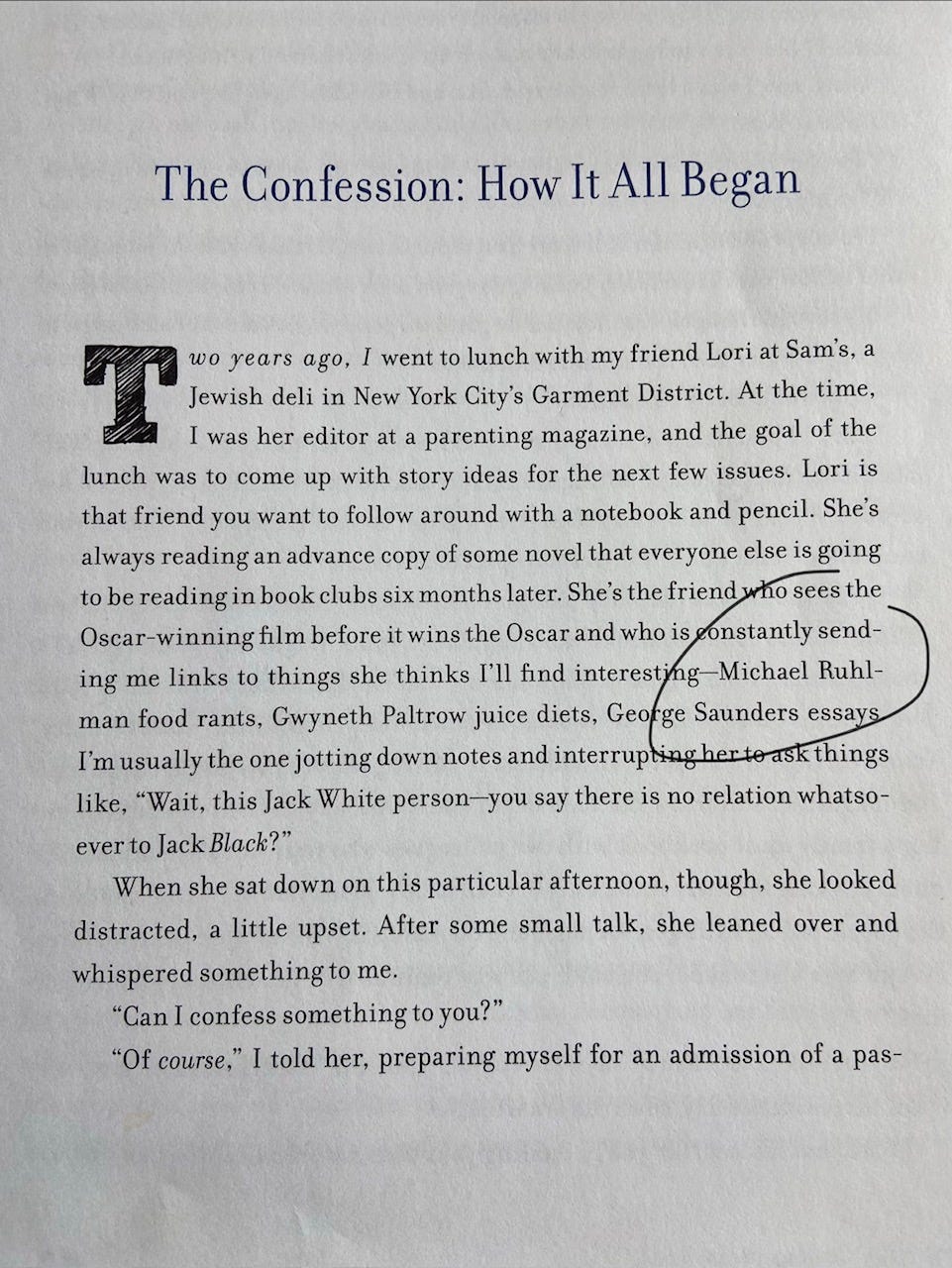
She’d known about my work as early as 2010, commenting on a teensy rant of mine on Huffpo about how we’re taught to believe that we’re too busy to cook. She had elsewhere commented on my G&T method. We’d even “appeared” together on a Food52 post on genius pasta recipes.
I really wanted to meet this woman. And to make the idea of meeting her more enticing, I knew that her husband, Andy, was a book editor at Random House.
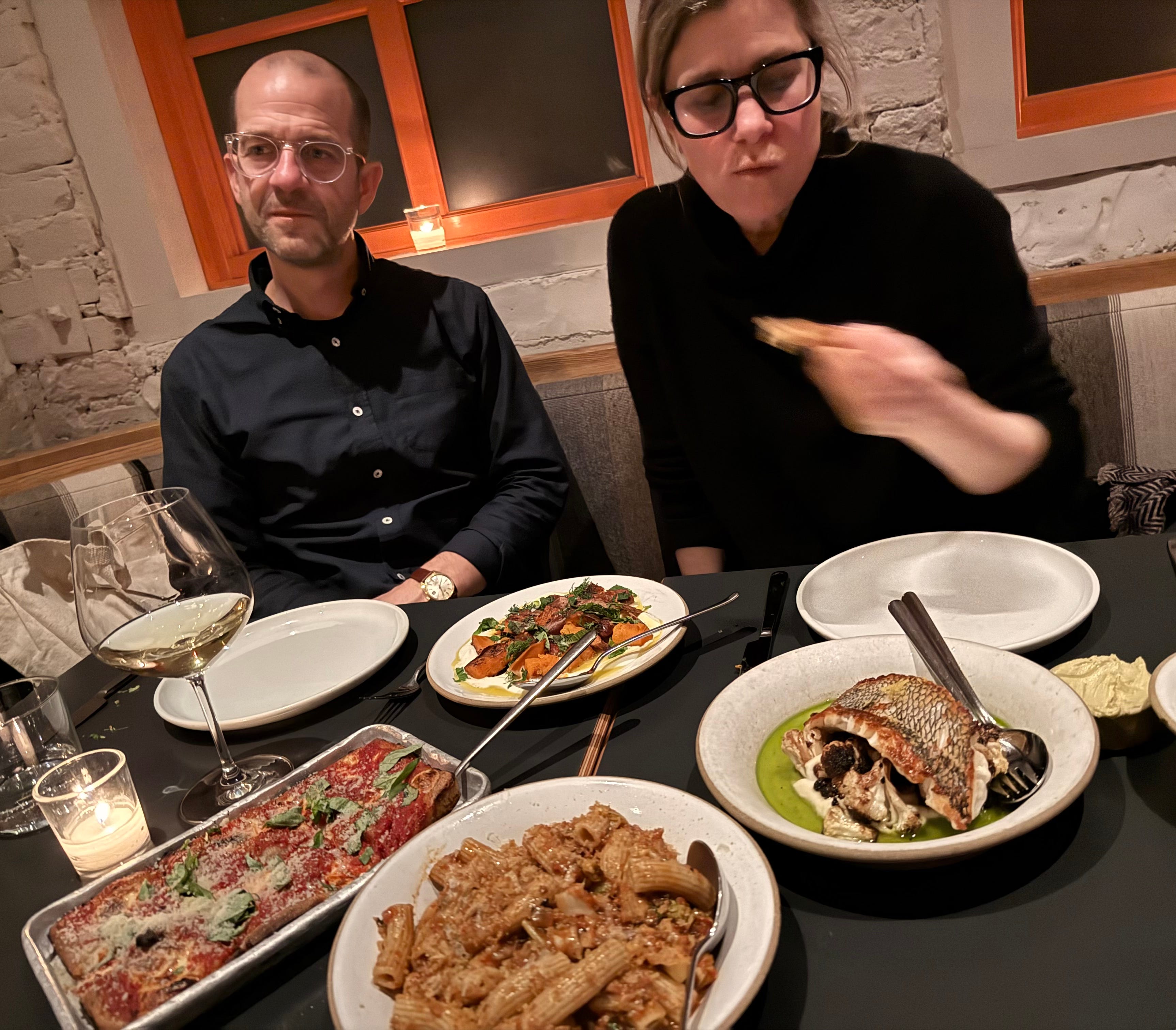
Knowing they’d moved back to NYC, I wrote to her suggesting, well, dinner, naturally. It’s a love story, after all. We were at last able to coordinate four schedules and meet, at Jenny’s suggestion, at Loring Place, happily well below 14th Street, on West 8th between 5th and 6th Avenues.
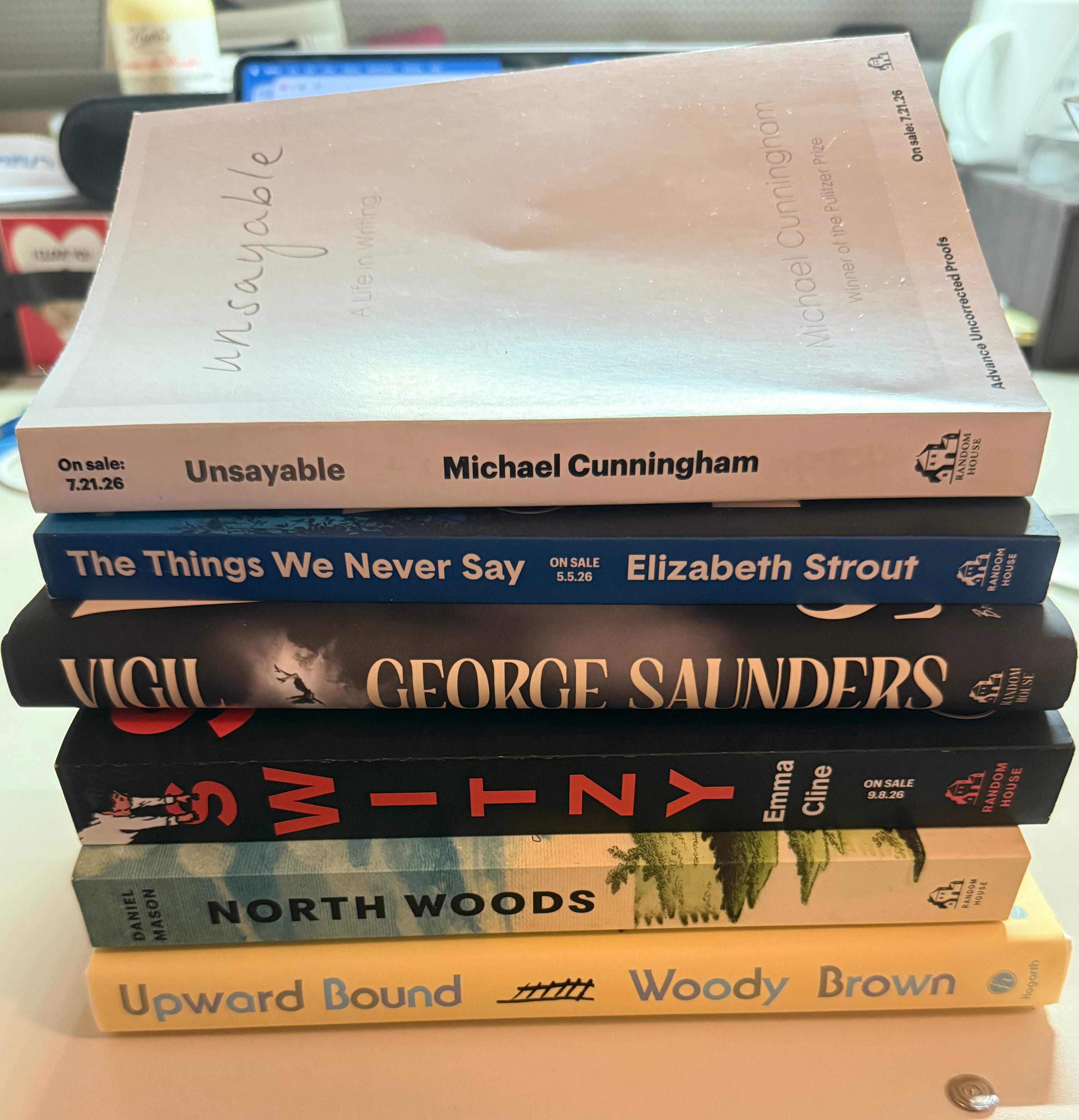
How lovely to meet Jenny and her equally engaging husband, who brought us a trove of Random House books, both published and soon to appear (joy!).
It was great to talk with Jenny about Substacking, at which she’s masterful. And valuable—she’s an excellent writer and the newsletter includes good recipes and meal planning, always with good reasons behind everything. We talked about how hard a demanding Substack publishing schedule is (she posts much more frequently than I). Ann and Andy talked books and authors.
And the food at Loring Place! Ann, my Promiscuous Carnivore, checking the menu online before hand, was skeptical: two meats, two fish courses—otherwise all vegetable dishes. Led by Chef Dan Kluger, opening chef of Jean-Georges’s ABC Kitchen, it’s a heavy vegetable forward restaurant. And damn was it good. Ann needn’t have feared having to grab a pepperoni slice on the walk home.
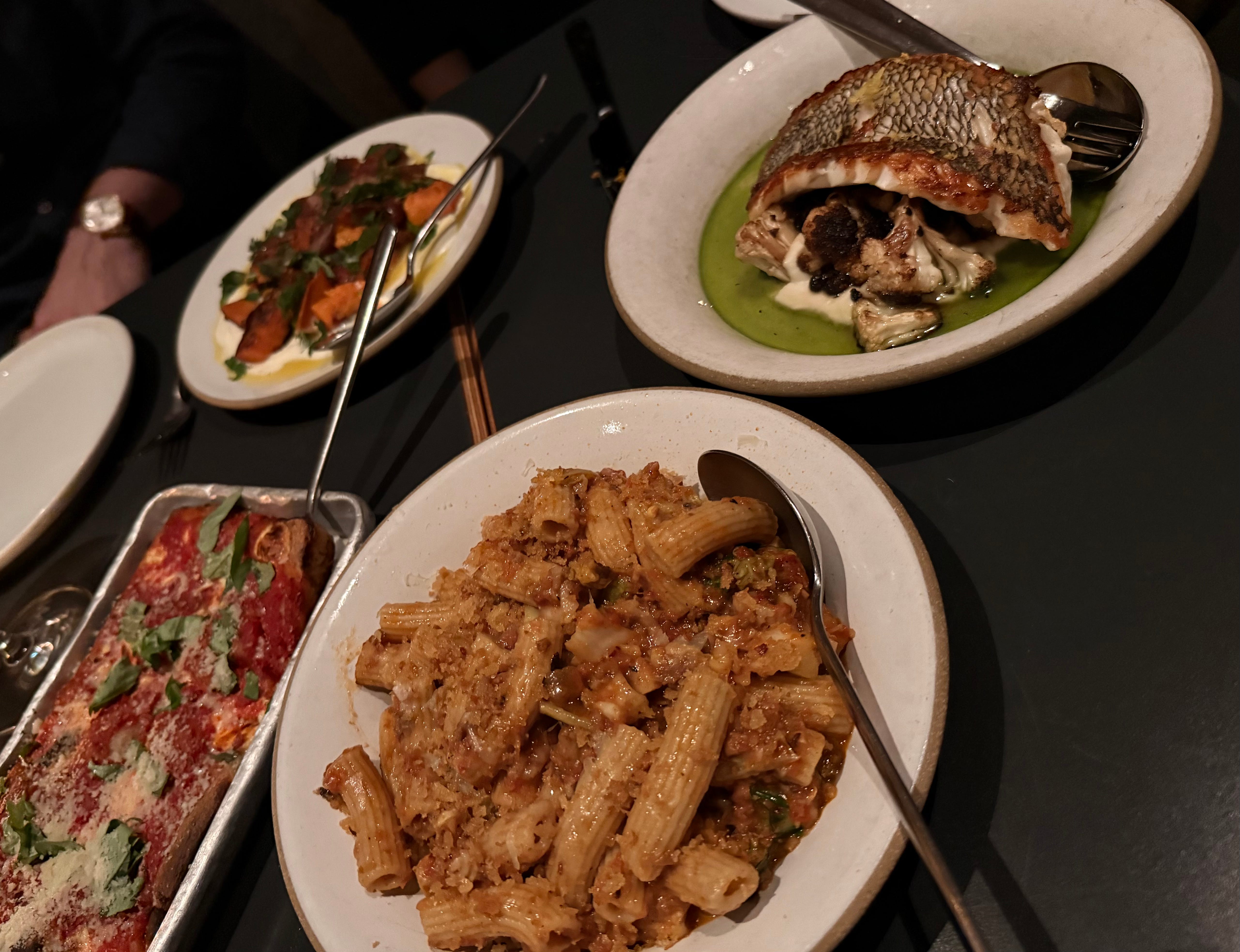
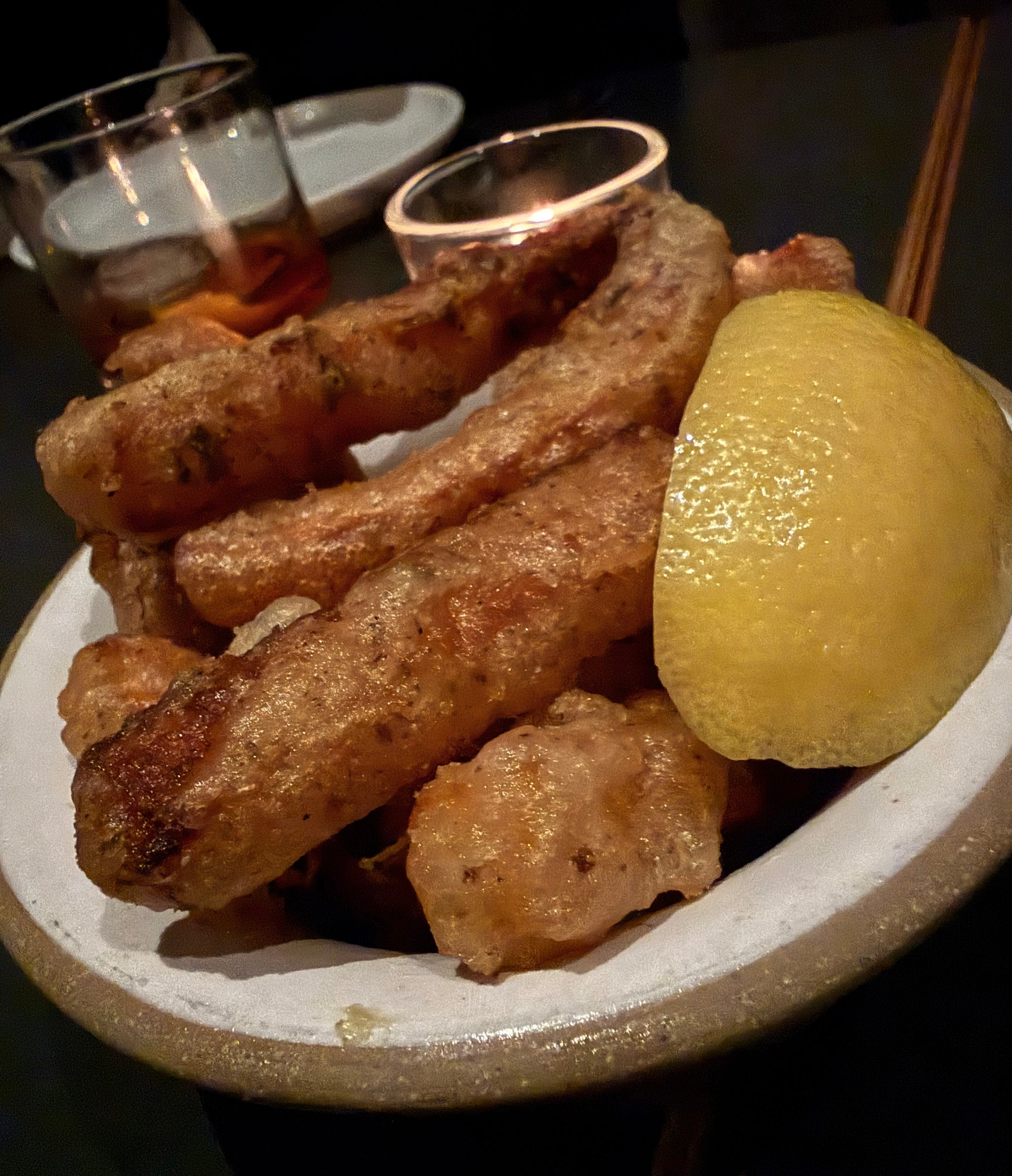
Sweet potatoes, bass, mushroom rigatoni, and pizza, well-crafted sauces and unexpected garnishes. The mushroom rigatoni, billed as a “bolognese,” was as toothsome and satisfying as a traditional bolognese. A starter course of the grilled broccoli with a kind of pistachio vinaigrette raised eyebrows. Yes, more please. And to snack on with our cocktail, outstanding butternut squash fries (below).
“Only Connect” …
What I was really left with as Ann and I walked home that night was the sense of a new connection and how valuable connection is today—genuine connection, not just liking something on Instagram or adding a comment to a Facebook post.
I got into blogging around 2006, thanks to Meg Hourihan, and found I loved it. The internet was a place I could speak my mind. I was allowed to rant back then. Opinionated readers could comment back and I could respond. We shared cooking stories and cooking preparations. And, well, just stories. I loved the community that developed around many blogs. For nine years I happily blogged away—didn’t have ads on my site, didn’t understand or care about Search Engine Optimization (eg monetizing content by manipulating algorithms).
But life changed course for me, I stopped blogging for a few years, and when I tried to return, that world was gone. What happened to the community? It was like showing up at one of your old haunts and finding all your friends were gone, replaced by a smattering of unfamiliar faces.
An email to David Lebovitz confirmed it—the blog world had transformed and old ways (and content) weren’t coming back. “Should I try to blog again?” I asked him. “You’re a writer,” he wrote back. “I don’t think you want to be spending all that time on SEO.” And he was, as ever (see creme Anglaise), right.
David suggested I consider a Substack newsletter, and of course he was right (I always ask WWDLD?). I’ve loved this Substack. It allows me to write what’s on my mind and to connect with readers once again. Connecting with readers is one of the greatest pleasures I take from this newsletter. Ann does, too, form this newsletter and her own.
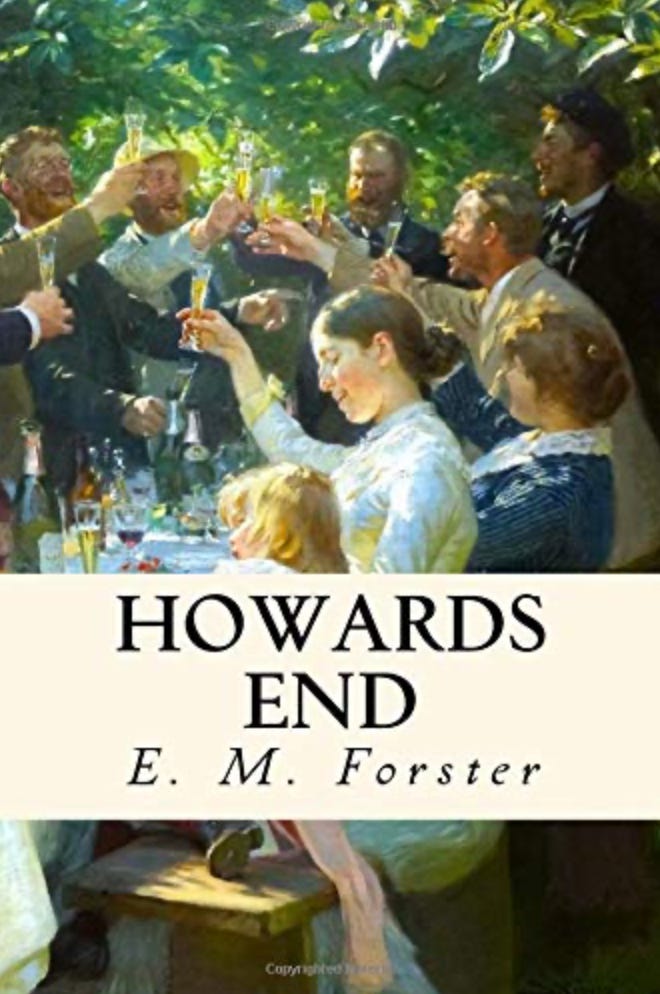
“Only connect,” E.M. Forster famously wrote in his epigraph to Howard’s End. It’s why we tell and watch and listen to stories. They connect us in all our complicated humanity. And so does cooking, and sharing a meal. With friends, family, and strangers.
My dinner with Jenny reminded me of all this, and I’m so grateful for it. Connection.
And what fun going down the rabbit hole opened by Jenny.
Related: In a long ago newsletter titled Saturdays!, I mentioned a Times newsletter I look forward to: Melissa Kirsch’s Saturday dispatches for the paper’s The Morning briefing. She just started a new one I recommend if you’re a Times subscriber: The Good List (shareable link). In it she offers a list of things to appreciate and enjoy.
Such as this: If you listen to podcasts, you know they often have a web page you can click to remember their recommendations. We’re devout listeners of Slate’s Culture Gabfest, which always concludes with the hosts’ endorsements that week—a great essay, a great video they loved, or an old movie one of them re-found. I may not care to remember the German philosopher Stephen Metcalf is recommending, but what was that film Dana urged on us? That sounded interesting. I can just go to their site.
In The Good List this week, Kirsch notes that when we go to an engaging dinner party, people recommend all kinds of things they’re enjoying—a new book, a useful new app or podcast—but we often don’t remember what they were. Kirsch’s suggestion: start a group text with the people at the dinner so that you can share them the following day and have a written record of all the endorsements. I love this idea.
Part of what’s important about this idea is that it enforces the connections in our lives. This is important, as Forster told us: in a world full of peril and uncertainty, our connections can be a forcefield defending us from the chaos.
What we’re drinking …
Same as the evening cocktail hour! Though its forcefield is considerably less durable. This week, as I’m recovering from painful knee replacement surgery, I’m going light on the cocktails and will take an amaro or a Spanish vermouth to watch the news and talk with Ann about our days. For those looking for low-alcohol libations, there’s nothing better.
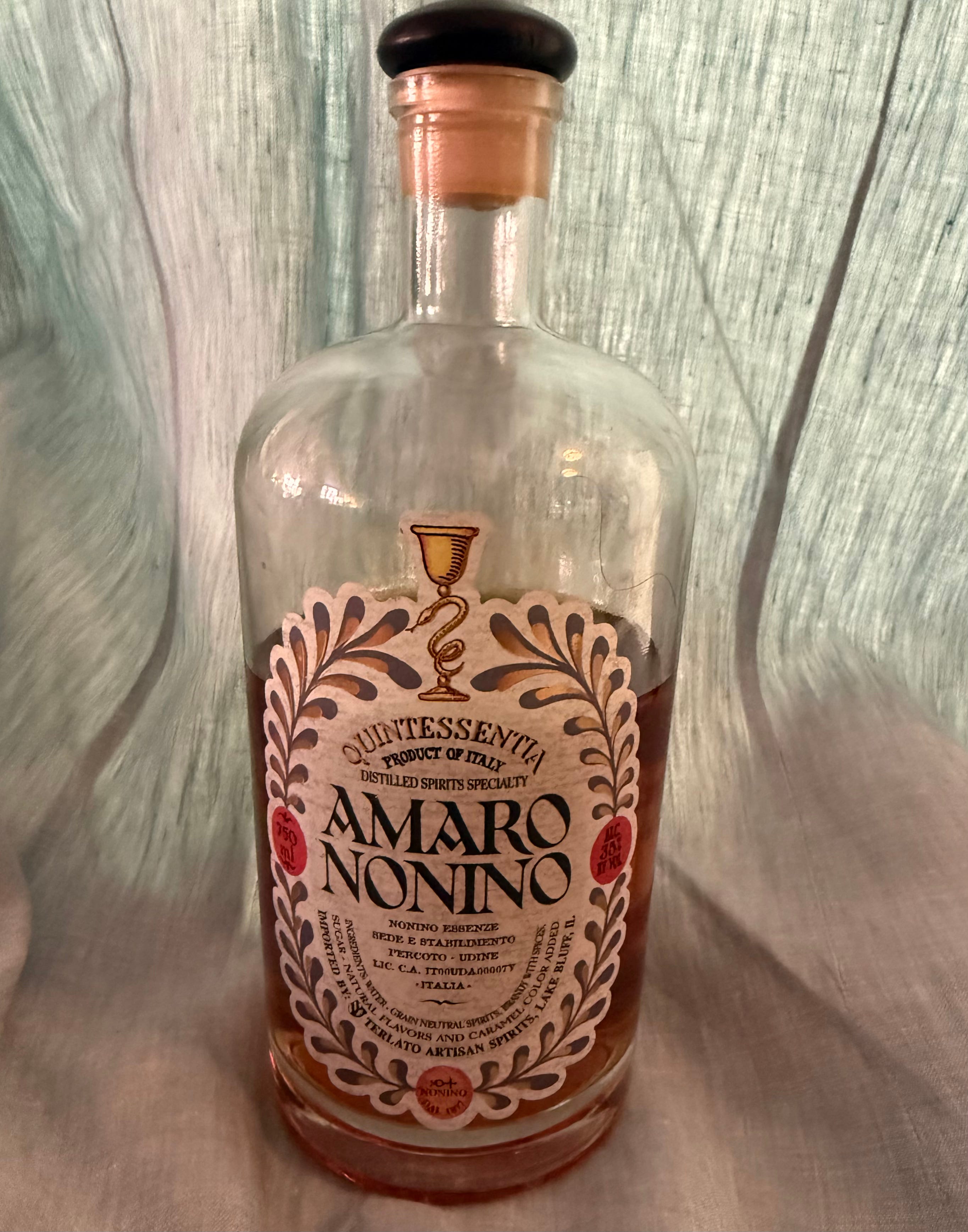
I happen to have a bottle of Amaro Nonino Quintessentia, an amaro created by the Nonino sisters, 5th-gen amaro makers, that combines amaro with a grape distillate. Their grandfather created an amaro-grappa libation; Amaro Nonino is lighter, but not that light, 35% ABV. It has a lovely herbaceousness (as an amaro should) combined with a gentle sweetness perfectly aligned with it the herbal bitterness.
This amaro, with a solid dose of seltzer water and a slice of orange, makes a fabulous spritz.
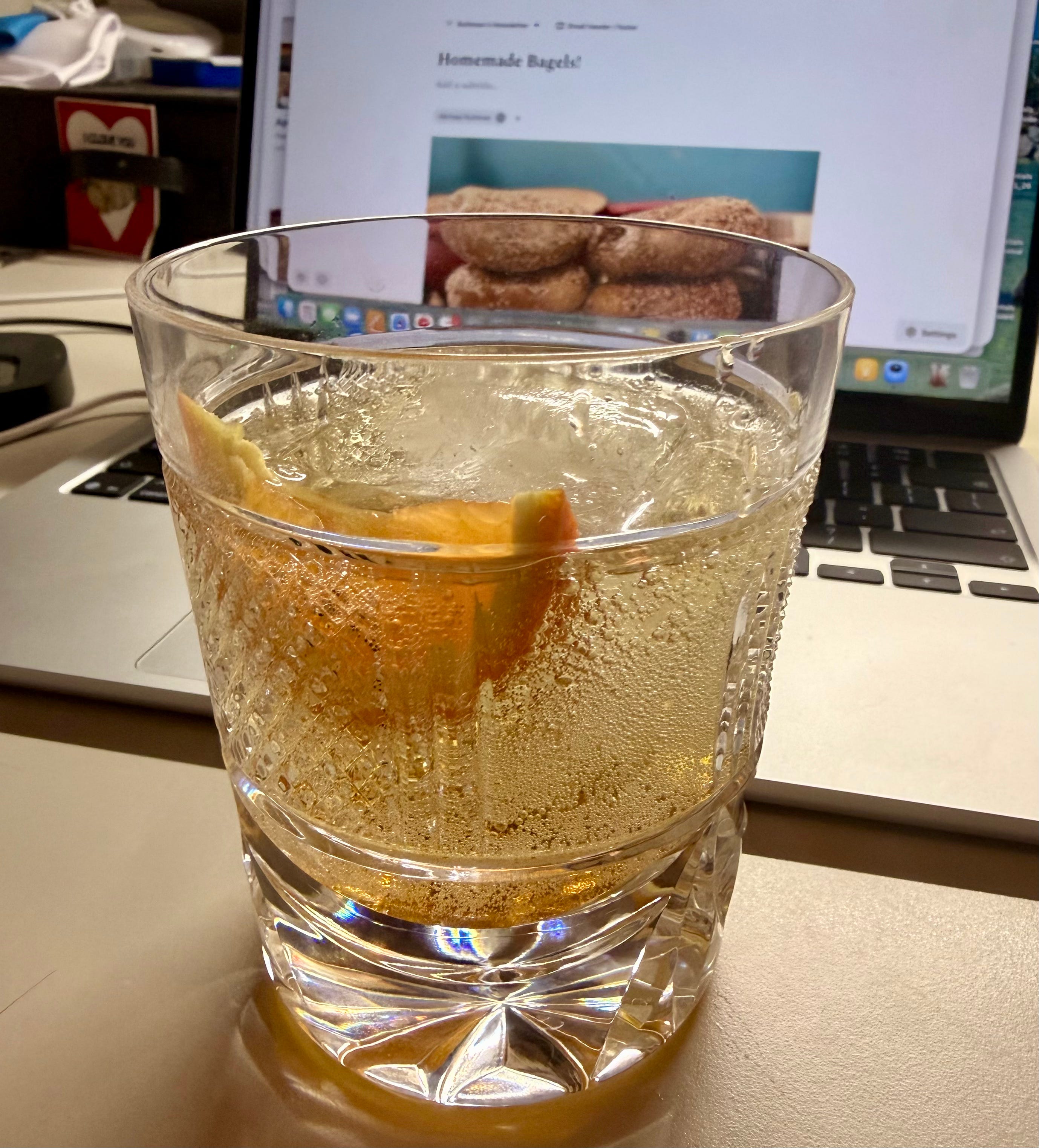
The Amaro Nonino Spritz
1 to 1.5 oz Amaro Nonino Quintessentia (or other dark, fortified amaro)
3 to 4 ounces seltzer water
1 slender orange wedge
Fill a highball with ice and pour the amaro over it. Add the seltzer, as desired. Garnish with the orange. Enjoy your refreshing cocktail!
For more on how Amaro Nonino is made, and five great cocktails that feature it, read this from Liquor.com. The Paper Plane is the most famous and did much to enhance the Nonino sister’s business—deservedly! Also amaro expert Brad Thomas Parsons writes about meeting the Nonino family in NYC in his LAST CALL newsletter (paywall if not subscribed).
What we’re watching …
Project Hail Mary. Given all the hype (the first box office smash of the year!) and our affection for Ryan Gosling, we were eager to see this film (despite the fact that space movies make Ann nauseous—she gets dizzy just walking down the glass stairs at the Apple store). And the film certainly delivers, primarily because Gosling is so watchable. Also the movie is light and funny—in a very Spielbergian/ET of way.
Bugonia. I resisted this because, um, well, it’s from the director of The Lobster and The Favorite. I hate movies that make no sense. On the other hand, Yorgos Yanthimos’s last film was the very entertaining and wild, Poor Things. Also, Ann liked it (plane watch). I finally watched it alone. … But, um, no thanks. I don’t like movies in which the protagonist is insane. I really don’t like women-chained-in-the-basement movies. Or ridiculous “twist” endings. That said, Jesse Plemmons (as the crazy protagonist) is stellar, as is his co-star Emily Stone, always excellent. That, at least, was a pleasure.
And thanks to Slate Culture Gabfest Dana Stevens’s endorsement, we streamed The Gift (2015) in which Jason Bateman and Rebecca Hall arrive at their new home in southern CA, a town where Bateman had gone to high school, only to bump into an odd, slightly creepy fellow classmate. It’s a genuinely complex, psycho thriller. Half the time you’re thinking, “Get out of the house if you think he’s there—why would someone do that?! The other half you’re thinking, “I didn’t see that coming.”
In the theater …
Death of a Salesman, thanks to the lovely Ellen Goldberg, who sadly got called into work the Saturday of her ticket to the show starring Nathan Lane and Laurie Metcalf. Ann had her creative writing workshop arriving at our apt for a makeup class … but I could take the ticket! So happy, thank you, Ellen!
I have never seen this quintessential work of American theater. I was raised on the Dustin Hoffman/John Malkovich filmed version of the play. But to see it live on stage was thrilling. Especially with two powerhouse actors and a very good Biff I hadn’t heard of.
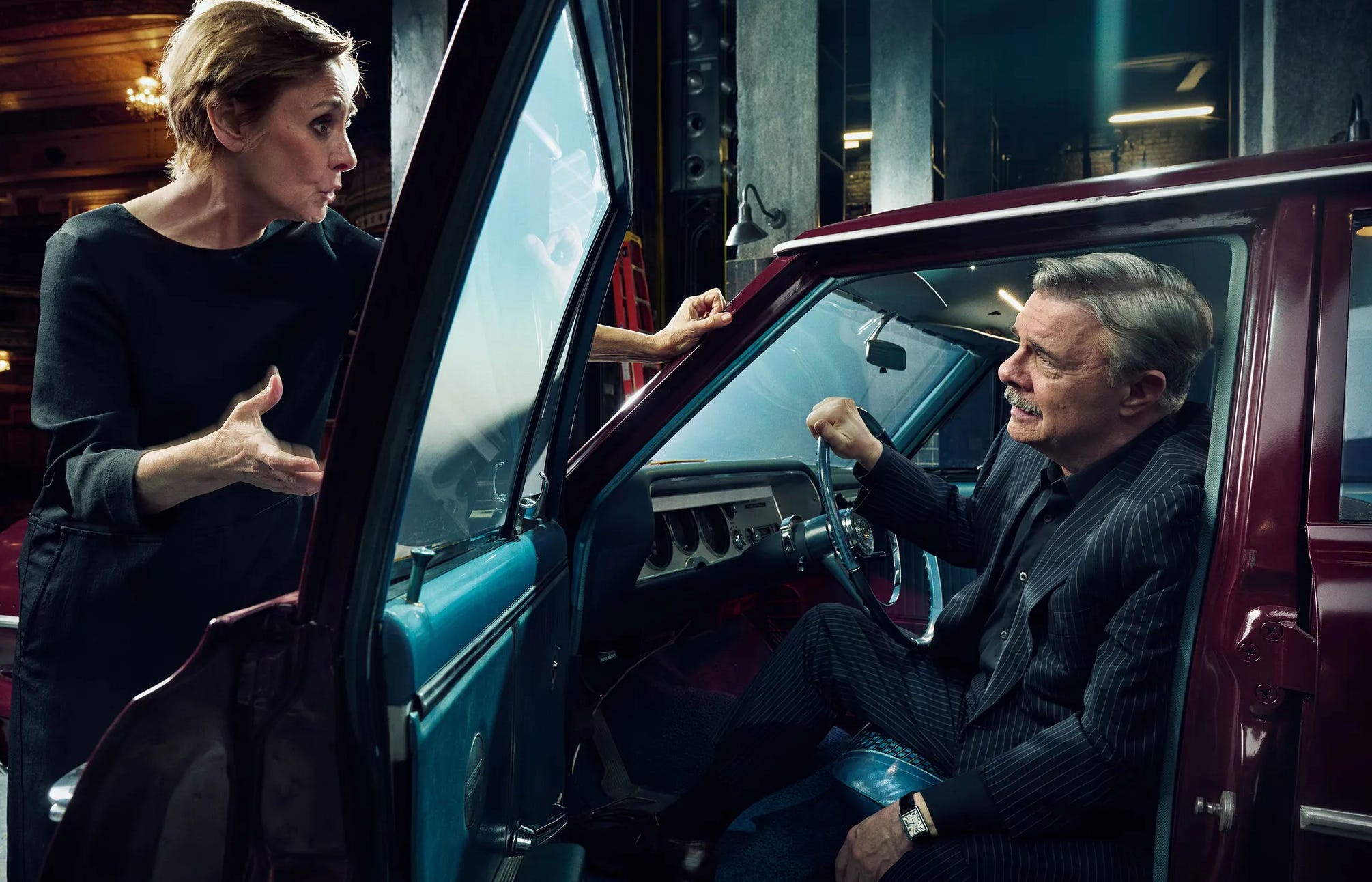
Three things: Seeing this production drives home what a towering work of theater it is and will remain. All performances were excellent, but Metcalf shows what a powerhouse she can be; she brings real edge and anger to the role of Willy’s wife, Linda. And three—when she delivers the famous “attention must be paid” speech toward the end of Act 1, whole body chills more than 75 years after it was written. (Watch a recent curtain call.)
Giant. Another powerhouse actor, John Lithgow, all in one weekend. He plays the antisemite and gruesome human who gave countless millions the pleasures of Charley and the Chocolate Factory, The Fantastic Mr. Fox, Matilda, The BFG and so much more. Lithgow absolutely relishes this role as a monster. Brilliant production.
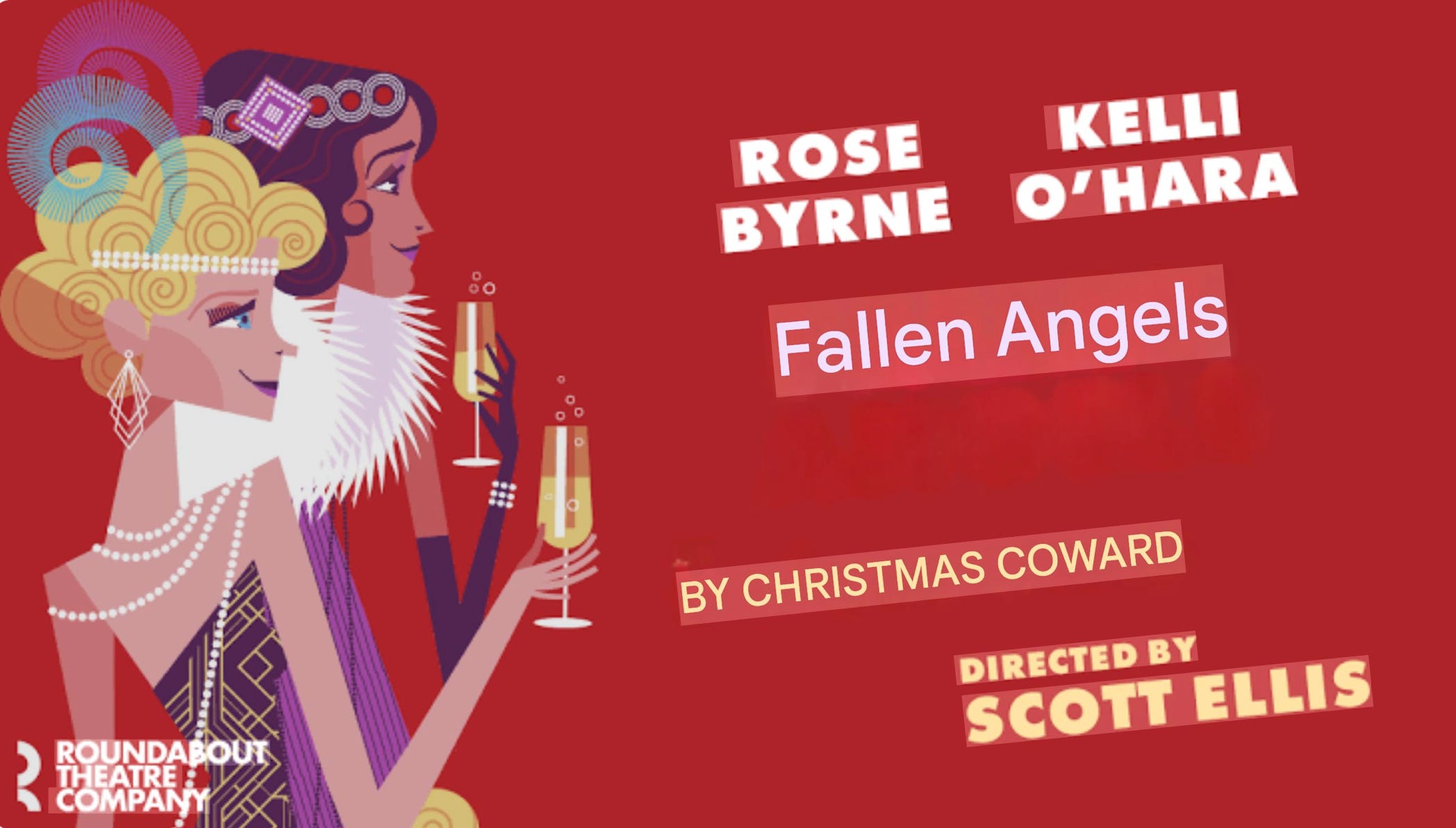
Fallen Angels is a Noel Coward play, first produced in London, 1925, starring Talulah Bankhead, currently starring Kelli O’Hara and Rose Byrne on Broadway. It’s a featherlight trifle but a delightful one. After Damages and If I Had Legs I’d Kick You, I’d forgotten Rose Byrne could do such masterful physical comedy. (See Bridesmaids.)
The Unknown is a one-man show starring Sean Hayes, who was so brilliant in Goodnight, Oscar he won a Tony. He’s brilliant here, as well, though the story, about a writer pursuing his stalker, is not commensurate with his talents.
And finally, in my last free week before knee surgery, Ann took half the family—ages 12 through post-retirement age, half of them from out of state—to The 25th Annual Putnam County Spelling Bee. It’s a revival of the 2005 B’way musical about a group of quirky middle-graders who compete in a spelling bee, with audience stand-ins. Total family delight.
What we’re reading …
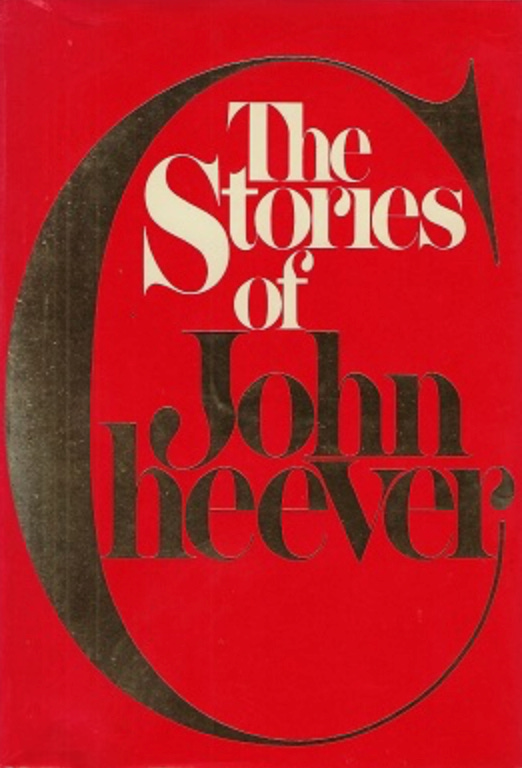
As I’ve mentioned, I’m filling in as a mentor to a couple of students in Ann’s Newport MFA at Salve Regina University, Newport, RI. One of the students has been working on short stories and so I made a list of some of the favorites I thought would give him a good start in studying the short story.
The Enormous Radio, by John Cheever. An average NYC couple buys a new radio to listen to live orchestral music, as was done in 1947. But instead the radio begins to broadcast conversations, and arguments, from within the building, nearly tearing the couple apart. Published 69 years ago, this story is strangely effective with Millennials and Gen Zs who have grown up with the complex and fraught dynamics of social media and the age of sharing.
White Angel, Michael Cunningham’s brilliant, heartrending story of a family in Cleveland, undone by the sudden death of one of the children. Featuring my beloved Lakeview Cemetery.
The Laughing Man, JD Salinger, the first story I was asked to study and emulate as an aspiring writer—it has a fascinating story-within-a-story makeup, about a youth baseball player in NYC and his coach.
“The Girl On the Plane,” by Mary Gaitskill, a story about a man on who boards a plane and proceeds to tell his seat mate about a disturbing sexual encounter, unaware how damning it is. A brutal story.
Redeployment, Phil Klay, because my student is a vet.
Hills Like White Elephants, Ernest Hemingway, for its masterful use of dialogue and conveying what’s just below the surface without actually saying it.
A Good Man Is Hard To Find, by Flannery O’Connor, the wickedly funny, dark-as-pitch southern writer. An ill-fate is brought upon a family driving from Georgia to Florida by the family’s own mother/grandmother, a busybody nuisance, when they run across a convict on a rural Georgia road. Maybe my most favorite line in a short story ever: “She would have been a good woman,” The Misfit said, “if it had been somebody there to shoot her every minute of her life.”
What We Talk About When We Talk About Love, Ray Carver, because it’s Ray Carver and one of his landmark stories.
Defender of the Faith, by Philip Roth, published in The New Yorker, in 1959. A Jewish staff sergeant at a Missouri military camp, 1945, struggles with religious identity and moral responsibility as a Jewish trainee exploits his own religion for favorable treatment from the sergeant. As usual, Roth took heat for creating a reprehensible Jewish character.
And that was a start. On deck, a couple of our most formidable short story writers, Lorrie Moore and her People Like That Are the Only People Here and Grace Paley and her Wants; as well as the haunting, very short, The Flowers by Alice Walker; In the Cemetery Where Al Jolson Is Buried, by Amy Hempel; and Pigeon Feathers by John Updike.
But enough about me! Tell me, tell everyone, what your top three short stories of all time are!
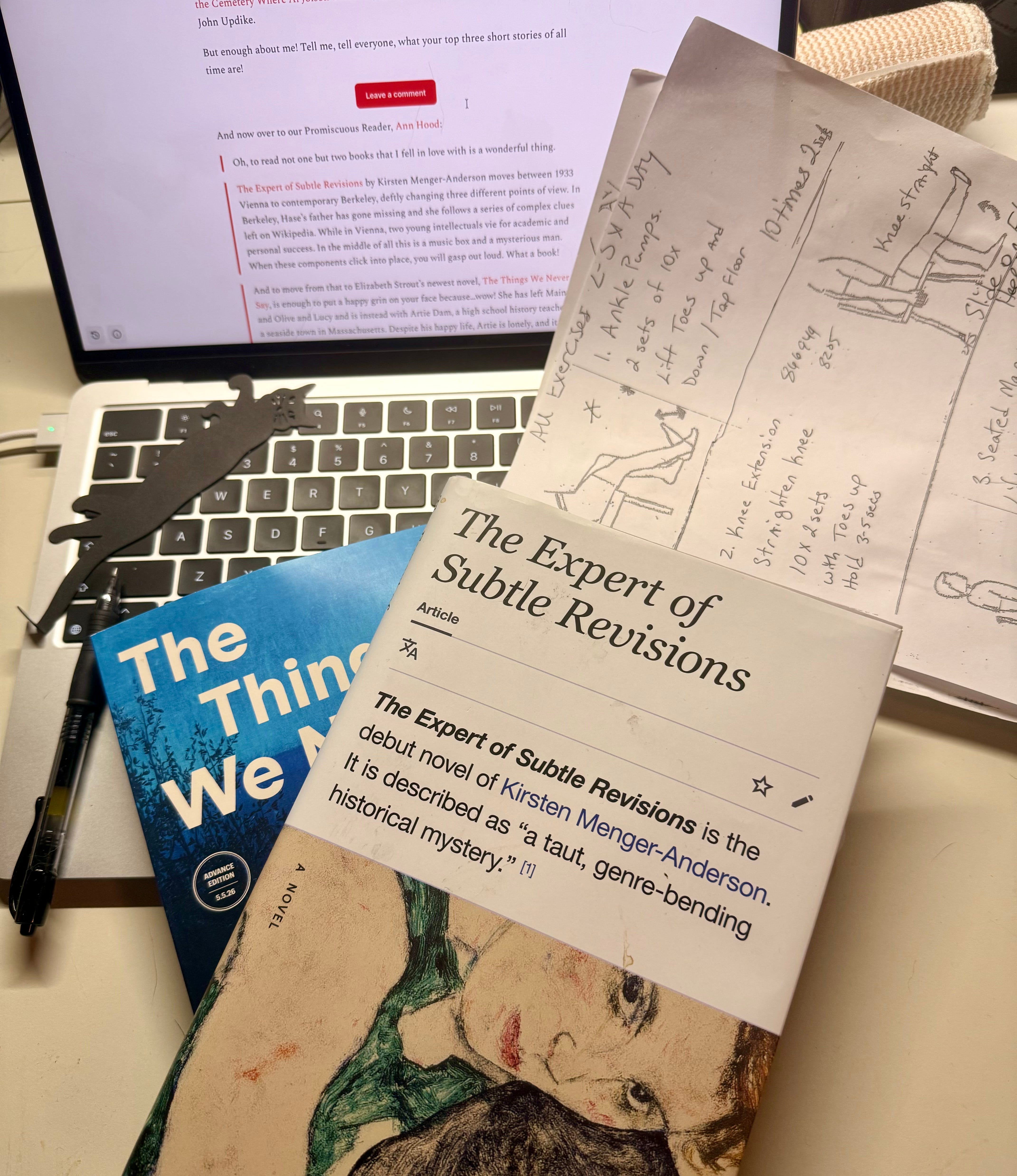
And now over to our Promiscuous Reader, Ann Hood:
Oh, to read not one but two books that I fell in love with is a wonderful thing.
The Expert of Subtle Revisions by Kirsten Menger-Anderson moves between 1933 Vienna to contemporary Berkeley, deftly changing three different points of view. In Berkeley, Hase’s father has gone missing and she follows a series of complex clues left on Wikipedia. While in Vienna, two young intellectuals vie for academic and personal success. In the middle of all this is a music box and a mysterious man. When these components click into place, you will gasp out loud. What a book!
And to move from that to Elizabeth Strout’s newest novel, The Things We Never Say, is enough to put a happy grin on your face because…wow! She has left Maine and Olive and Lucy and is instead with Artie Dam, a high school history teacher in a seaside town in Massachusetts. Despite his happy life, Artie is lonely, and it is this loneliness that makes you love him even more. The novel is, of course, full of Strout’s signature compassion and insights. Breathtaking.
Links we’ve loved …
I’m fascinated by the evolution of cookbooks, and two new ones continue a leaning in to narrative, connecting story and cooking: Ella Quittner’s cultural-historical cookbook, Obsessed With the Best, and Tanya Bush’s memoir cookbook, Will This Make You Happy: Stories & Recipes from a Year of Baking. Read about the books in this article in Cultured.
I love recommendations from favorite podcasts. This one comes from the aforementioned Stephen Metcalf, Janet Malcom’s fascinating appreciation of Salinger’s Franny & Zooey, a book was widely lambasted when it was published in 1961. I first read it in my early twenties—kaboom went my head.
Have you ever imagined what travel to faraway locales would be like if you were blind? Or even asked why would you travel as a blind person? This NYTimes story follows those who do. There’s a lot more to travel than seeing sights.
The BBC looks at eight of the world’s best beaches. (Brighton Beach? … really?)
I’ve been dreaming of learning Spanish for several years, obviously without success. The Guardian has some ideas that might actually help me learn a new language at my age.
And two more articles from The Guardian, which we love. Thirty-three photographs that shocked—shocked!—the world.
And: Seagulls on the beach truly creep Ann out—one once stole a sandwich right out of her hand on Elephant Rock Beach. Now she’s got a way to stop the buggers: paint eyes on the takeaway box!
Feel like a lovely, contemplative poem? Read this short one, At Least, by Raymond Carver. I love his straightforward verse.
And finally …
I’d forgotten about a great annual video created by David Erlich, film critic for IndieWire, who creates a montage from the 25 best films of the year. When I remembered I used to post them early in the new year, I couldn’t recall who made them or where I could find them. Well, I finally did find them. Herewith, Erlich’s montage of the best films of 2025.
Carpe Diem! Enjoy your weekend! Fry potatoes in duck fat or make bagels or write an old friend or plant a garden! It can be a wonderful world.
Till next time!
—Michael
Love this Michael (as always!) and tell Ann we are taking her to ABCV next. Also, 100 percent agree on the connection point, it’s the only thing that matters to me now. Thanks for the shout out.
Every week I look forward to your intelligent, posts! So much to read and think about.